Walk down any street in The Beaches and you'll feel it — the particular gravity of homes that have been standing long enough to mean something. Broad front porches. Brick that's softened with time. Trees whose roots predate the neighbourhood's last reinvention.
Older homes carry weight. The question buyers always ask us is whether that weight adds value — or subtracts it.
The honest answer: both, depending on what you're looking at and what you know how to see. At The Richards Group, we've helped clients navigate East Toronto's housing stock for years, and the relationship between a home's age and its market value is one of the most nuanced — and most misunderstood — conversations in real estate.
Here's how we decode it.
Age Isn't a Number — It's a Story
In most markets, a home's age is treated as a depreciation factor. As mechanical systems wear, as building codes evolve, as materials age — the assumption is that older means lesser.
The Beaches doesn't work that way. Not entirely.
Here, the age of a home is often inseparable from its identity. A well-preserved Victorian on Kippendavie Avenue isn't competing against a new build on the same terms. It's operating in a different category entirely — one where architectural character, lot depth, and neighbourhood continuity carry real premiums.
Age, in this context, is part of the offering.
The Beaches doesn't work that way. Not entirely.
Here, the age of a home is often inseparable from its identity. A well-preserved Victorian on Kippendavie Avenue isn't competing against a new build on the same terms. It's operating in a different category entirely — one where architectural character, lot depth, and neighbourhood continuity carry real premiums.
Age, in this context, is part of the offering.
What Adds Value in an Older Home
Not all age is equal. These are the factors that push older homes higher in the market:
Original Architectural Character
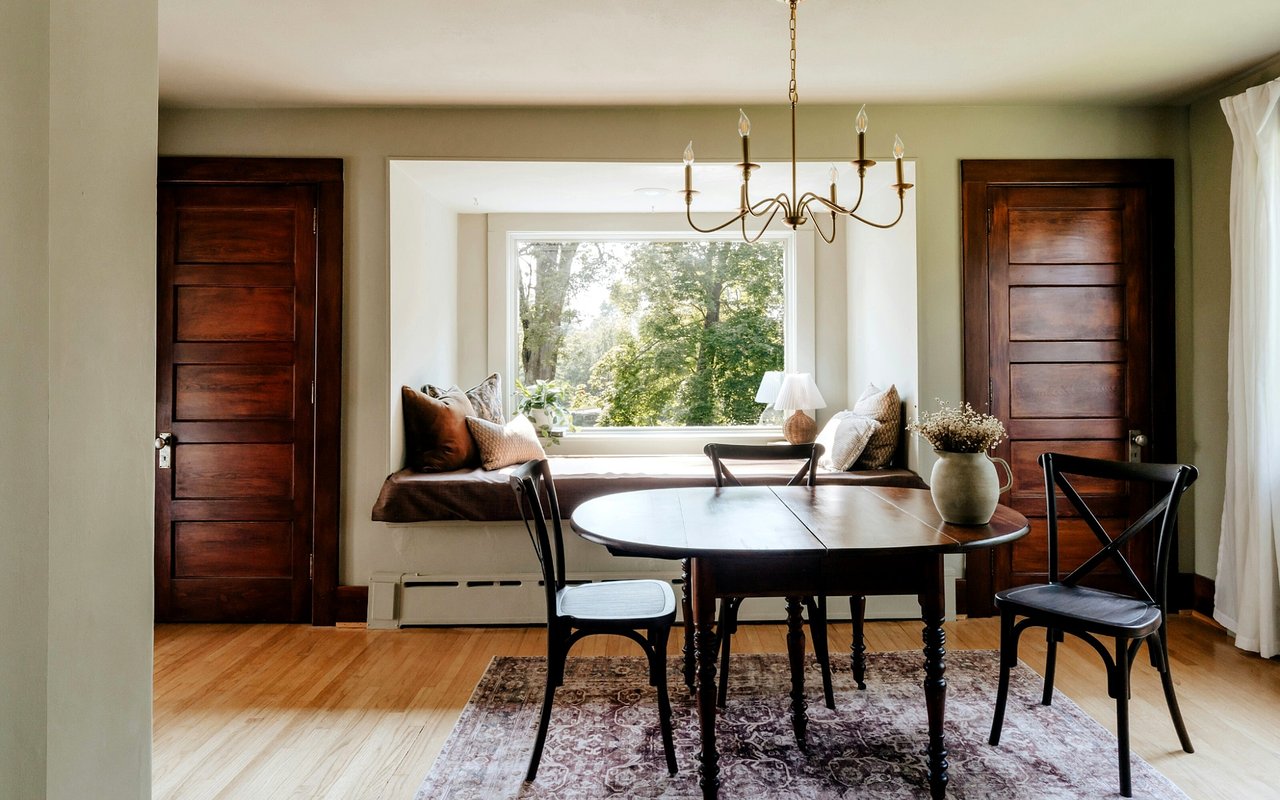
Craftsmanship that predates mass production is genuinely rare. Original millwork, plaster ceilings, transom windows, hardwood floors with real depth — these aren't features you can replicate affordably. Buyers who understand this pay for it.
When a home's original character has been carefully preserved — or thoughtfully restored — it commands a premium that newer construction simply can't match.
When a home's original character has been carefully preserved — or thoughtfully restored — it commands a premium that newer construction simply can't match.
Lot Size and Positioning
Many older homes in The Beaches sit on lots that would never be approved under today's zoning. Deeper lots. Wider frontages. Mature tree canopies that took decades to grow. The land itself carries value independent of whatever sits on it.
Location Stability
Older neighbourhoods are, almost by definition, established. The schools are known. The walkability is real. The texture of daily life has been lived in and confirmed. That certainty has market value — buyers pay for it whether they name it or not.
Renovation Upside
An older home that's been intelligently updated — modern systems, open-plan living, refined finishes — can achieve the best of both worlds. The bones of the past, the comfort of the present. These hybrid properties often outperform comparable new builds on price per square foot.
What Pulls Value Down
The same age that creates character can also create cost. We always want our clients to see both sides clearly.
Deferred Maintenance
An older home that hasn't been maintained doesn't carry a character premium — it carries a liability. Aging roofs, outdated electrical panels, original plumbing, inadequate insulation: these aren't aesthetic issues, they're structural ones. Buyers who don't budget for them discover them anyway, usually at the worst time.
A pre-purchase home inspection is non-negotiable. In older homes, it's even more critical.
A pre-purchase home inspection is non-negotiable. In older homes, it's even more critical.
System Age
Mechanical systems have lifespans. Furnaces. Water heaters. Knob-and-tube wiring. When multiple systems are approaching end-of-life simultaneously, the cost exposure compounds quickly. Understanding what's been replaced — and when — shapes the real price of a home.
Code Compliance and Insurance
Older homes may not meet current building codes, which can affect insurance premiums, renovation permits, and financing conditions. Some insurers charge more for homes with older wiring or heating systems. It's worth knowing before you're under contract.
Functional Layout Challenges
The way people lived in 1920 isn't the way people live today. Smaller kitchens. Formal dining rooms. Limited closet space. Some older homes have been reconfigured beautifully — others haven't. Layout limitations can affect both livability and resale, depending on the buyer pool.
The Renovation Calculation
One of the most common questions we hear: is it worth buying an older home that needs work?
It depends on three things:
What the work actually costs — not what it looks like it costs. Get contractor quotes before you remove conditions. Renovation budgets have a way of expanding. Build in a contingency.
What the finished product would sell for — in this neighbourhood, at this scale of renovation. A skilled agent can help you model the post-renovation value so you're buying the upside, not guessing at it.
Your own appetite for the process — renovating an older home is rewarding and genuinely difficult. It takes longer than planned, costs more than projected, and surfaces surprises. For the right buyer, it's deeply satisfying. For others, it's the wrong fit entirely.
We help clients make this distinction early — before they're committed to a project they haven't fully accounted for.
It depends on three things:
What the work actually costs — not what it looks like it costs. Get contractor quotes before you remove conditions. Renovation budgets have a way of expanding. Build in a contingency.
What the finished product would sell for — in this neighbourhood, at this scale of renovation. A skilled agent can help you model the post-renovation value so you're buying the upside, not guessing at it.
Your own appetite for the process — renovating an older home is rewarding and genuinely difficult. It takes longer than planned, costs more than projected, and surfaces surprises. For the right buyer, it's deeply satisfying. For others, it's the wrong fit entirely.
We help clients make this distinction early — before they're committed to a project they haven't fully accounted for.
New Builds vs. Older Homes in The Beaches
The Beaches has relatively limited new construction. When new builds do come to market here, they typically command a premium — buyers pay for modern systems, current code compliance, and the certainty of move-in readiness.
But older homes in The Beaches often hold their value — and in some cases, outperform new builds over time — because of what can't be replicated: the neighbourhood integration, the mature landscaping, the architectural distinction that makes a street feel like something more than a collection of structures.
For buyers exploring older homes Toronto-wide, The Beaches represents a particular case study. The neighbourhood's character is inseparable from its age. Buying here often means buying into a story that started long before you arrived — and will continue long after.
But older homes in The Beaches often hold their value — and in some cases, outperform new builds over time — because of what can't be replicated: the neighbourhood integration, the mature landscaping, the architectural distinction that makes a street feel like something more than a collection of structures.
For buyers exploring older homes Toronto-wide, The Beaches represents a particular case study. The neighbourhood's character is inseparable from its age. Buying here often means buying into a story that started long before you arrived — and will continue long after.
What Buyers Should Know Before Making an Offer
A few things we always walk through with clients considering an older home:
- Request all available records — permits pulled, work completed, major system replacements. Disclosure isn't always complete; ask specifically.
- Hire a qualified home inspector with experience in older homes — not all inspectors are equally equipped to assess century-old construction methods. It matters.
- Understand your insurance costs upfront — get a quote before you're committed. Some older systems materially affect premiums.
- Look at the neighbourhood trajectory — is this block being carefully maintained? Are neighbouring properties being well renovated, or let go? The street context shapes your resale story.
- Price in the work honestly — a home priced to reflect deferred maintenance can still be a strong buy. The math just has to work.
Frequently Asked Questions
Do older homes appreciate differently than newer ones?
In established neighbourhoods like The Beaches, older homes with strong architectural character have historically appreciated well — often because land value anchors them and supply is constrained. However, a poorly maintained older home can lag the market significantly. The condition and character of the specific property matter as much as the age.
How does a home's age affect mortgage financing?
Most lenders don't penalize age directly, but they do look at condition and systems. Homes with knob-and-tube wiring, older plumbing materials, or significant deferred maintenance may affect financing terms or require insurance conditions. A mortgage broker familiar with older-home purchases is an asset here.
Are older homes more expensive to insure in Toronto?
Often, yes — depending on the systems in place. Updated electrical, plumbing, and heating systems can significantly reduce premiums. Some insurers specialize in heritage and older properties and offer more competitive rates than generalist providers.
What's the difference between a heritage-designated home and a simply older one?
A heritage-designated property is formally recognized by the city for its historical or architectural significance. Designation can restrict certain types of exterior alterations, but it can also come with grant programs and tax incentives. Not all old homes are designated — and not all designated homes are old in the conventional sense. It's worth checking designation status early in the process.
Should we buy an older home that needs full renovation, or find one that's already been updated?
Both can be strong choices — the answer turns on your budget, your timeline, and your tolerance for process. A fully updated older home offers predictability. A renovation project offers the ability to shape the outcome to your taste, often at a lower entry price — but with more complexity. We help clients model both scenarios so the decision is grounded in actual numbers, not assumptions.
The Home That Holds Its Story
There's something worth saying plainly: the homes in The Beaches that people fall in love with are almost never the newest ones on the block. They're the ones that have absorbed decades of life — that carry the marks of the people who lived in them and the hands that shaped them.
Market value is real and it matters. But it's only part of what makes a home worth owning.
For buyers who are drawn to older homes Toronto has to offer — and The Beaches in particular — we think the relationship between age and value is one of the most interesting conversations in real estate. Not because it's simple, but because it rewards the people who take the time to understand it.
The Richards Group Re/Max Hallmark — East Toronto's #1 Real Estate Brokerage is here for that conversation. We know these streets. We know these homes. And we know how to help you see what they're worth.
Market value is real and it matters. But it's only part of what makes a home worth owning.
For buyers who are drawn to older homes Toronto has to offer — and The Beaches in particular — we think the relationship between age and value is one of the most interesting conversations in real estate. Not because it's simple, but because it rewards the people who take the time to understand it.
The Richards Group Re/Max Hallmark — East Toronto's #1 Real Estate Brokerage is here for that conversation. We know these streets. We know these homes. And we know how to help you see what they're worth.